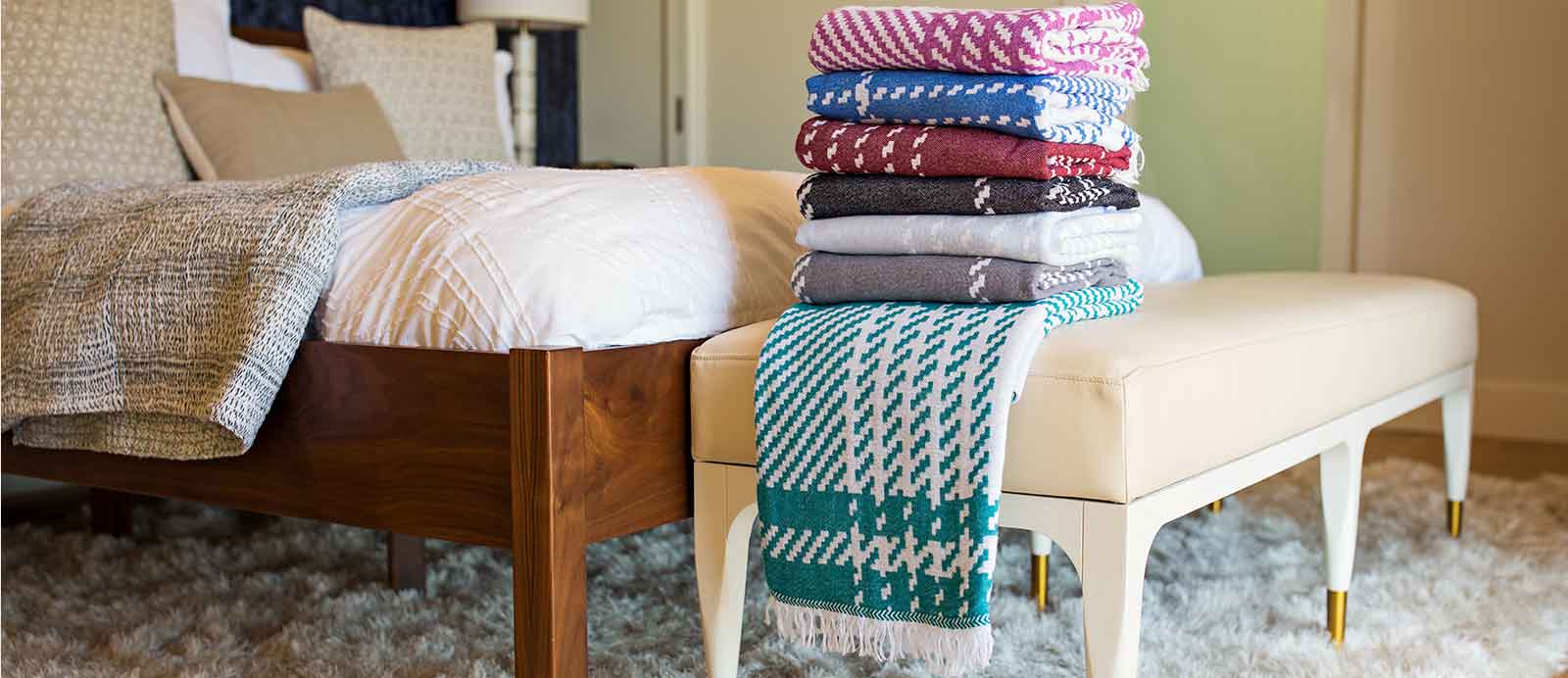

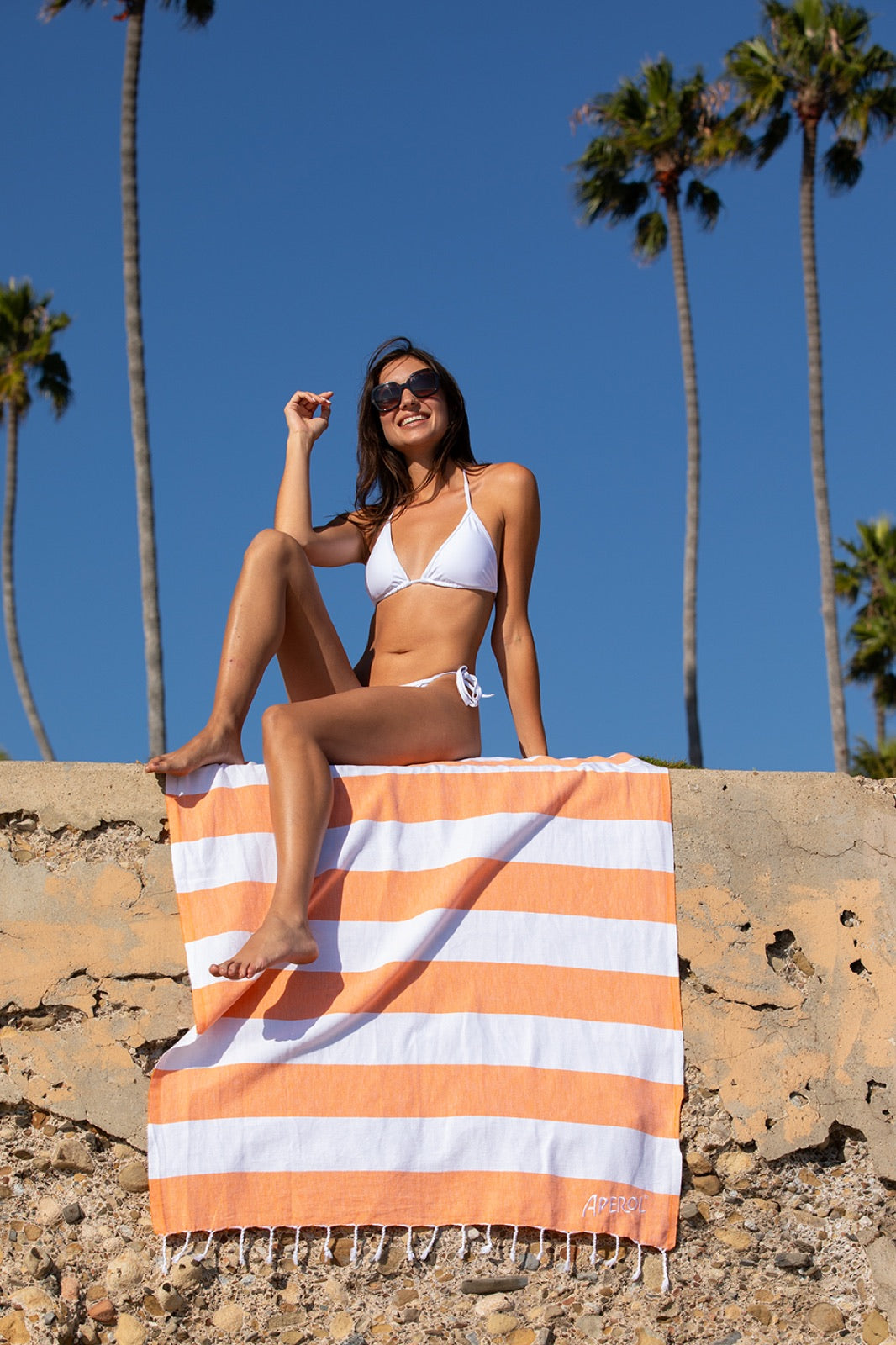
A Turkish towel is a flat-woven cotton towel, traditionally called a peshtemal, that was first used in the bathhouses (hammams) of the Ottoman Empire. Instead of the thick, looped pile of a terry towel, it is woven flat, so it is lighter, thinner, and dries much faster while still soaking up water well. That makes it a natural fit for the beach, the bath, travel, and just about everything in between.
Here in Santa Barbara we have been obsessed with these towels for years, so we put together everything you might want to know: where they come from, how they compare to the terry towels in your linen closet, and how to pick the right one.
A short history: from the hammam to the beach
The peshtemal (you will also see it spelled pestemal or peshtamal) grew up alongside the Turkish hammam. Bathers wrapped themselves in a long, light cotton cloth as they moved between warm and hot rooms. It needed to be modest, comfortable when damp, and quick to dry between uses, which is exactly what a flat weave delivers.
Over generations, weavers in Turkey refined the craft on hand looms, adding stripes, patterns, and the hand-knotted fringe that has become the towel's signature look. Today the same basic design travels far beyond the bathhouse. If you want to go deeper into the name and its cousins, read our post on what a fouta or peshtamal towel is.
Turkish towel vs. terry: what is actually different?
The biggest difference is the weave. Terry towels are made with loops of yarn that stand up from the base fabric. Those loops hold a lot of water, but they also make the towel bulky, heavy when wet, and slow to dry. A Turkish towel is woven flat and tight, so there is less fabric to stay damp.
| Feature | Turkish towel (flat weave) | Terry towel (looped pile) |
|---|---|---|
| Feel | Thin, smooth, gets softer with washing | Thick and plush |
| Drying time | Fast, often dries on a line or chair in a short time | Slower, can stay damp and get musty |
| Packability | Folds flat, fits in a tote or carry-on | Bulky, takes up space |
| Sand | Shakes off easily | Gets trapped in the loops |
| Versatility | Towel, wrap, scarf, throw, picnic cloth | Mostly just a towel |
Neither is "better" for every job. Many people keep a plush terry towel for a long winter bath and reach for a Turkish towel the rest of the time. We cover the trade-offs in more detail in Turkish towels vs. regular towels.
Why people love them
Absorbent without the bulk
A common question is whether a thin towel can really dry you off. A good cotton flat weave absorbs water readily, and because the fabric is spread thin, it tends to feel less soggy as you use it. Absorbency also improves after the first few washes as the cotton fibers relax and open up.
Quick-drying
Hang a Turkish towel over a chair after a swim and it is usually ready again well before a terry towel would be. That matters in a small bathroom, on a boat, or on a trip when you have to pack up a damp towel.
Lightweight and packable
Most Turkish towels fold down to roughly the size of a paperback. They take up very little room in a beach bag, a gym bag, or a suitcase.
Beautiful enough to leave out
With their stripes, patterns, and fringe, they look as good draped over a sofa as they do on the sand.
How to use a Turkish towel
Once you have one, you will find yourself using it for all sorts of things:
- Beach and pool: lie on it, dry off with it, then wrap it around your waist for the walk back to the car.
- Bath: a light, fast-drying bath towel or hair wrap.
- Travel: towel, airplane blanket, scarf, or sarong all in one.
- Picnics: a pretty, washable picnic cloth or table runner.
- Home: a throw on the back of a chair or the foot of a bed.
- Gym and yoga: a thin layer over a mat or bench.
How to choose a Turkish towel
Not every Turkish towel is the same. The two biggest things to think about are weight and weave, and both depend on how you plan to use it.
Classic: lightweight flat weave
Our Classic collection is built around a lightweight flat weave. It is the easiest to pack, the quickest to dry, and the most versatile as a wrap or scarf. Our best seller, the Essential Turkish Towel ($29.98), lives here and comes in more than 20 colors, so it is an easy one to collect in a few shades.
Premium: heavier, more textured weaves
If you want something with more body, look at our Premium collection. These towels run about 290 to 350 grams and use heavier, more textured weaves, which give them more texture and a more substantial feel in the hand while keeping the quick-drying benefits of a flat weave. Textured styles like the Diamond Turkish Towel are a good example of how a woven pattern adds both grip and character.
Luxe: our most special pieces
Our Luxe collection is where we put the towels we would want to give as a gift or keep for ourselves, with richer details and finishes. Think of these as heirloom-style towels for the bath, the beach house, or the guest room.
Quick questions to ask yourself
- Will I mostly travel with it? Go lighter.
- Will it live in the bathroom or replace a bath towel? Consider a heavier weave.
- Do I want it to double as decor? Look for a pattern or you love.
- Is it a gift? Pick a timeless stripe or a Santa Barbara design.
Why buy from The Riviera Towel Company
We are a small Santa Barbara shop that started with one simple idea: the hand-loomed Turkish towel is the perfect towel for coastal living. We choose our weaves and colors with the beach, the pool, and the bath in mind, and we use them the same way you will, mostly on the sand at our local beaches.
When you shop with us, you are also supporting the ocean. We give 5% of our net profits to organizations that heal and protect it. And with a little gentle care, your towel will get softer with every wash.
Frequently asked questions
What is a Turkish towel?
A Turkish towel, or peshtemal, is a flat-woven cotton towel that originated in Turkish bathhouses. It is lighter and thinner than a terry towel, dries faster, and can double as a wrap, scarf, or throw.
Are Turkish towels as absorbent as regular towels?
A good cotton Turkish towel absorbs water well and does not feel as heavy or soggy when wet. Absorbency usually improves after the first few washes as the cotton softens and opens up.
What is the difference between a Turkish towel and a terry towel?
Terry towels have raised loops of yarn that make them plush but bulky and slow to dry. Turkish towels are woven flat, so they are lightweight, quick-drying, easy to pack, and shed sand more easily.
What does peshtemal mean?
Peshtemal is the traditional Turkish name for the flat-woven cloth used in hammams. You may also see it spelled pestemal or peshtamal. Today the word is used for Turkish towels in general.
Which Turkish towel weight should I choose?
Choose a lightweight flat weave, like our Classic Essential towel, for travel and the beach. Choose a heavier weave from our Premium collection, around 290 to 350 grams, if you want more body for the bath or home.
Come say hello at our shop at 17 W. Gutierrez St. in Santa Barbara, or call us at 805-560-1571. We offer free shipping on orders over $95, and 5% of our net profits go to organizations that heal and protect the ocean. Thanks to our customers, we have donated $75,000 so far.