
Dog beds take up a lot of living room real estate but often do not add much to your design aesthetic. We looked for hip cool dog bed covers but found most are dull and uninspired.
In this easy DIY project our daughter shows you how to recycle your Turkish towels to add some design sense to your decor.
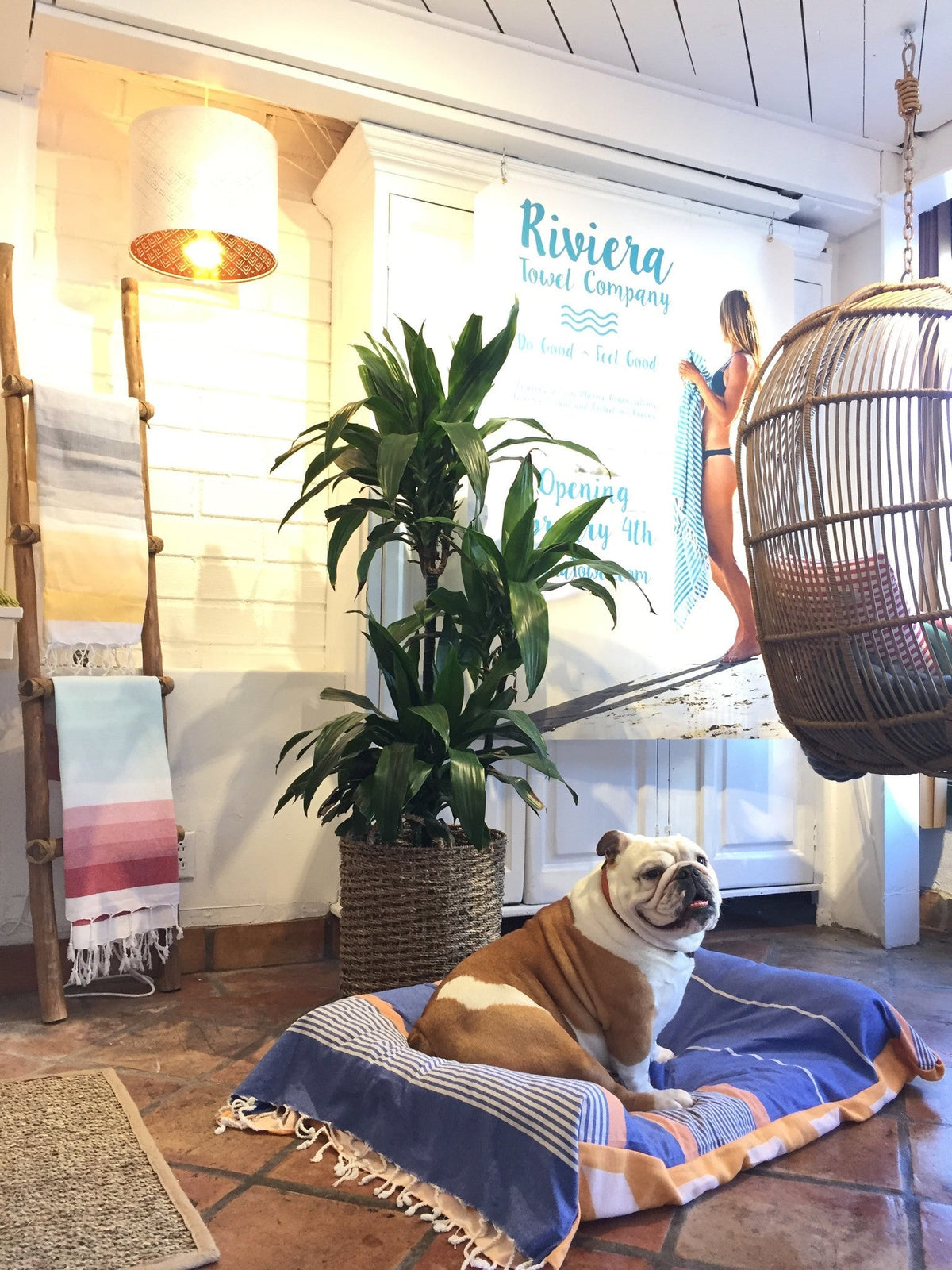
This is an easy DIY project for rainy days and board kids :) Here's how to make stylish slip on, removeable and washable cover for medium large dog beds. Using Turkish Towels creates a stylish unstructured casual fit that can replace your old cover with some California chic colors for your home.
Why Are Turkish Towels Better Than Traditional Terry Towels?
Turkish towels—also called Peshtemal or Foutas—outperform traditional terry towels because their long‑staple Turkish cotton weave is lighter, faster‑drying, more absorbent, stylish enough to double as a fashion accessory, and produced with sustainable farming practices.
What’s Wrong with Typical Terry Towels?
Drawback
Why It Matters
Bulk & weight
A plush terry bath sheet can exceed 700 gsm, hogging suitcase and linen‑closet space.
Slow drying
Thick loops trap moisture, encouraging mildew if a towel is reused before fully drying.
Average absorbency
Short‑staple cotton sheds lint and loses softness after repeated washing.
Energy drain
Heavier fabric takes longer in the washer and dryer, wasting water, electricity, and time.
Why Are Turkish Towels Better?
Ultra‑absorbent yet Quick‑Dry. Flat‑woven on shuttle looms, Turkish long‑staple fibers expand with each wash, drinking up water in a single pass but releasing it quickly while hanging. You get the absorption of a spa towel without the soggy wait.
Feather‑Light Portability. Weighing roughly 300–400 gsm, a Peshtemal packs to the size of a paperback—ideal for beach days, picnics, yoga class, or minimalist travelers counting carry‑on ounces.
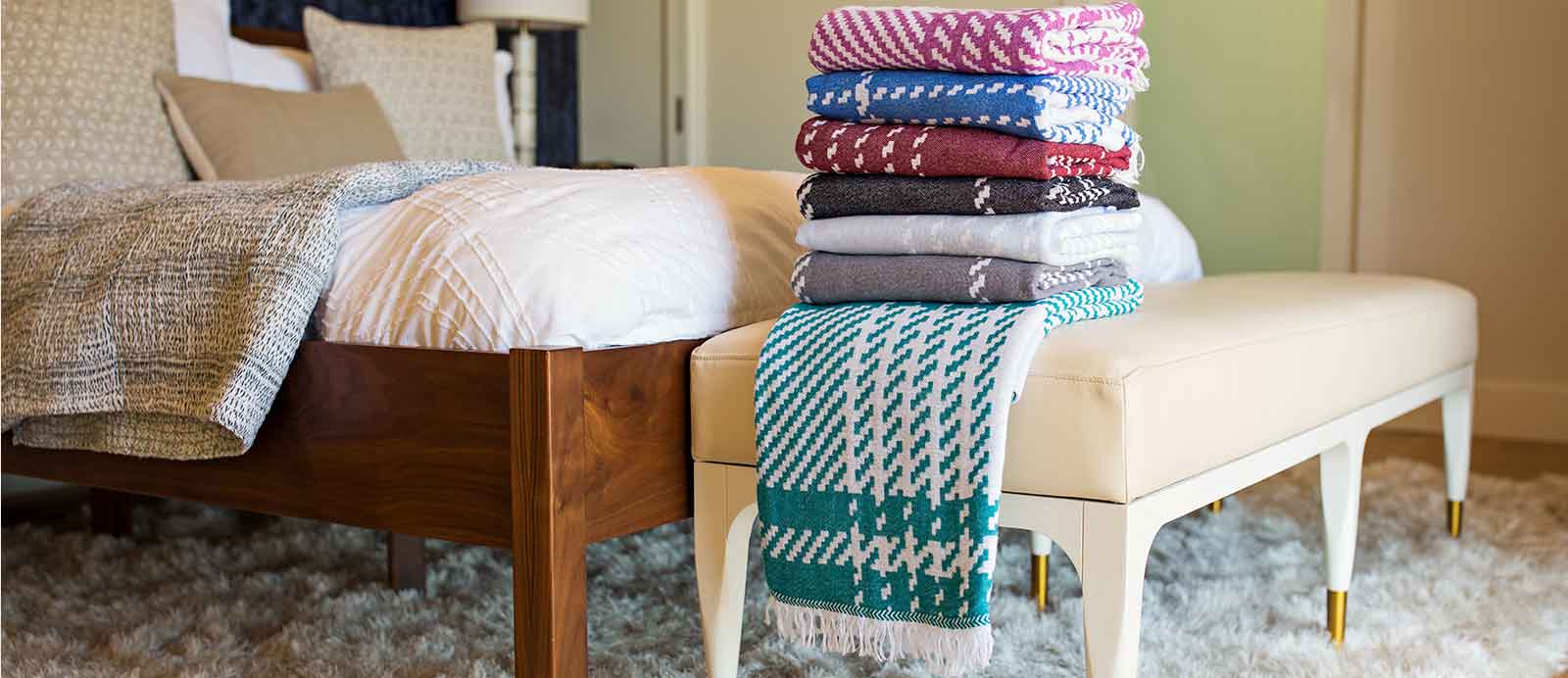
Multi‑use Fashion Accessory. Bold stripes, tassels, and artisanal dyes let a Fouta moonlight as a scarf, sarong, table throw, baby blanket, or couch accent. One item solves multiple style needs while cutting closet clutter.
Sustainable Cotton Credentials. Turkish Aegean cotton grows with fewer pesticide inputs and is harvested in longer staples, meaning stronger yarn that lasts years longer. Many mills are OEKO‑TEX®‑ and BCI‑certified, ensuring lower water use and fair labor.
Low‑Maintenance Luxury. Because the weave is flat, sand and lint shake out effortlessly. Toss it in a cold wash, line‑dry for fresh Mediterranean softness, and skip the energy‑hungry tumble cycle.
Fast‑Start Checklist: Switching to Turkish Towels
Pick the right size. Standard Peshtemal measures about 37 × 70 in (95 × 180 cm): full‑body coverage, backpack‑friendly.
Verify fiber origin. Look for “100 % Turkish long‑staple cotton” on the label; avoid polyester blends that cut absorbency.
Do a pre‑wash. Soak overnight in cool water, then launder once—this “blooms” the fibers for maximum softness.
Style it smart. Drape over a sofa, knot as a sarong, or roll into your gym bag; one towel, many fashion‑forward uses.
Care sustainably. Wash on cold with mild detergent, skip fabric softener, and air‑dry—your towel (and the planet) will thank you.
Shop Recommended Turkish Towels
Ready to upgrade? Explore our favorite picks from RivieraTowel.com—all woven from premium Aegean cotton:
Classic Striped Turkish Towel – timeless cabana stripes with hand‑tied tassels.
Eco Premium Collection – plant‑based dyes, OEKO‑TEX® certified, ideal for sensitive skin.
Travel‑Lite Mini – compact 20 × 40 in size for gym bags and hair wraps.
Note: RivieraTowel.com offers free U.S. shipping on orders over $75 and a 30‑day satisfaction guarantee—so you can switch risk‑free.
Bottom Line: Traditional terry towels are heavy, slow, and resource‑intensive. A Turkish towel delivers equal—or better—absorbency in a lighter, faster‑drying, sustainably grown package that doubles as an everyday fashion accessory.