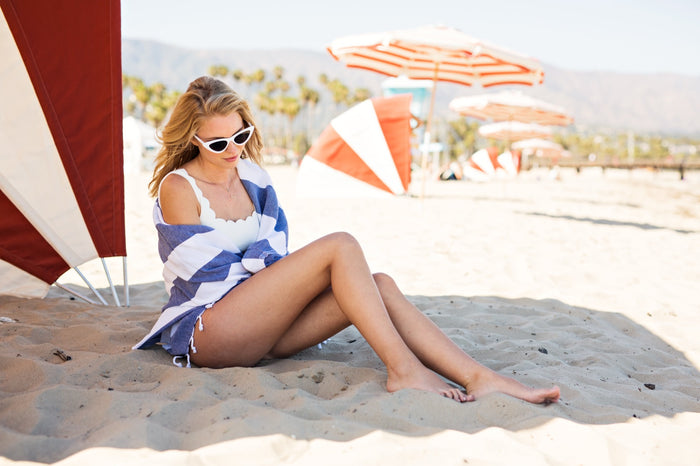
Best sarong beach cover-ups in 2026
Best overall: a full-length cotton sarong for an adjustable beach wrap. Best for fluid drape: a rayon sarong. Best for minimal coverage: a short chiffon sarong. The best sarong beach cover up in 2026 is the one that stays tied, gives you the coverage you want, and feels comfortable over your swimsuit.
- The best sarong beach cover up for adjustable coverage is a full-length cotton rectangle.
- Choose rayon for fluid drape, chiffon for sheer coverage, or a wrap skirt for a defined fastening.
- Riviera Towel is best for shoppers exploring Turkish towels and beachwear together.
- Check wrap overlap and care instructions before choosing a beach cover-up.
Why this matters
A sarong has to work after you move, not just while you stand in front of a mirror. A wrap that looks long enough can still open when you sit; a fabric that looks opaque when gathered can become transparent when stretched across your hips.
Riviera Towel sells hand-loomed Turkish towels and beachwear, making it a relevant starting point for coordinating a beach towel with a cover-up. Treat those as separate jobs unless the towel's dimensions, texture, and fastening also suit wearing.
This 2026 guide ranks sarong constructions rather than named products. Start with the wearing experience you want, then compare individual garments against the same criteria.
What makes the best sarong beach cover-up?
- Secure overlap: The fabric should overlap comfortably after you tie it, including when you walk and sit. Length alone does not establish coverage.
- Suitable opacity: Choose deliberate sheerness or deliberate coverage. Check the fabric over your actual swimsuit rather than judging it folded.
- Comfortable fastening: A knot, tie, or closure should hold without digging into your waist. Extra fabric is useful only if you can secure it comfortably.
- Manageable fabric: Cotton, rayon, chiffon, and toweling create different wearing experiences. Fiber, weave, thickness, and finish all matter.
- Useful coverage: Match the hem and opening to your plans. A beach wrap and a garment for walking through town do not need to serve the same purpose.
- Realistic care: Read the garment's care label. Do not assume every sarong tolerates the same washing or drying routine.
Best sarong cover-ups at a glance
| Rank and option | Best for | Standout feature | Key limitation |
|---|---|---|---|
| Full-length cotton sarong | Adjustable everyday coverage | A rectangular wrap with several tying positions | Creases and can form a bulky knot |
| Full-length rayon sarong | Fluid drape | Fabric that falls closely around the body | Care requirements depend on the garment |
| Short chiffon sarong | Sheer poolside coverage | A light, translucent layer | Does not provide opaque coverage |
| Opaque wrap skirt | A defined fastening | A skirt construction with ties or another closure | Less adaptable than a loose rectangle |
| Flat-weave Turkish towel wrap | Combining drying and wrapping | A towel you can wrap after swimming | Wearability depends on size and thickness |
The table is a decision guide, not a claim that every garment within a category performs identically. For your 2026 shortlist, compare the actual fabric composition, measurements, fastening, and care label before choosing.
1. Cotton sarong: best beach cover-up for adjustable coverage
A full-length cotton sarong is a useful default when you want a simple rectangle you can tie around your waist. You control the overlap and the position of the knot rather than relying on a fixed waistband.
Best for: beachgoers who want adjustable coverage without a built-in skirt shape. Choose the fabric by feel as well as fiber content: a stiff cotton cloth and a soft, lightweight cotton weave will not knot or hang the same way.
Cotton sarong pros:
- A rectangular shape supports different tying positions.
- Adjustable overlap lets you choose where the opening sits.
- The same cloth can create a longer or folded-shorter wrap.
Cotton sarong cons:
- Cotton fabric can crease during packing and wear.
- Thick fabric creates more bulk at the knot.
Check the corners before committing. You need enough fabric to make a secure knot without using up the overlap you wanted for coverage. If tying it exposes your swimsuit more than intended, choose a wider rectangle rather than pulling the fabric tighter.
Verdict: Buy a full-length cotton sarong as the default adjustable wrap, provided it passes your movement and opacity checks.
2. Rayon sarong: best beach cover-up for fluid drape
A rayon sarong suits you when the way the fabric falls matters more than a structured shape. Rayon fabrics commonly have a soft, fluid drape, although the weave and weight still determine how an individual garment behaves.
Best for: swimmers who want a wrap that falls close to the body. Try the fabric knotted at your preferred position; a pleasing drape across the front does not automatically mean a comfortable knot at the hip.
Rayon sarong pros:
- Fluid fabric creates a less structured silhouette.
- A rectangular version retains adjustable tying positions.
- Soft folds suit a draped rather than tailored look.
Rayon sarong cons:
- Washing and drying instructions require garment-specific attention.
- A fluid fabric does not guarantee opacity or a secure knot.
Rayon describes the fiber, not a complete care routine. Read the label before treating the garment like your swimsuit, and check whether its required care fits your travel plans. Avoid buying on the assumption that every beach garment can go into the same laundry load.
Verdict: Buy a rayon sarong for drape; skip it if its care instructions do not suit your routine.
3. Chiffon sarong: best beach cover-up for sheer layering
A short chiffon sarong adds a translucent layer around your hips without hiding the swimsuit underneath. Chiffon describes a fabric construction, not a single fiber, so check the composition separately.
Best for: poolside lounging when you intentionally want sheer, limited coverage. Treat the transparency as part of the design rather than expecting a lightweight wrap to behave like an opaque skirt.
Chiffon sarong pros:
- Sheer fabric keeps your swimsuit visible.
- A short cut leaves your lower legs uncovered.
- A small wrap creates less fabric to arrange around your waist.
Chiffon sarong cons:
- Transparency makes it unsuitable when you want substantial coverage.
- A short hem and open wrap provide limited coverage while seated.
Check the edges, too. Fine fabric needs a finished hem that lies comfortably against your skin. Tie the wrap over your swimsuit and walk around before deciding whether the opening sits where you want it.
For a 2026 beach wardrobe, choose chiffon as a styling layer, not as a substitute for clothing wherever more coverage is expected.
Verdict: Buy a short chiffon sarong for deliberate sheerness; skip it for opaque coverage.
4. Opaque wrap skirt: best beach cover-up for a defined fastening
An opaque wrap skirt gives you a more garment-like alternative to a loose sarong. Look for ties or another fastening that holds the skirt at your preferred waist position, then check the overlap independently.
Best for: beachgoers who prefer a defined fastening over knotting loose corners. The construction does more of the positioning work, but you still need to assess the opening while moving.
Wrap skirt pros:
- A defined fastening gives you a repeatable way to put it on.
- A shaped waistband provides a more skirt-like fit.
- Opaque fabric suits readers who do not want a sheer layer.
Wrap skirt cons:
- A shaped garment offers fewer tying arrangements than a rectangle.
- An opaque fabric can still expose your swimsuit through the wrap opening.
Sit down, take a long step, and check the garment from the side. These movements tell you more about usable coverage than a front-facing photograph. Do not tighten the waistband to compensate for inadequate overlap; choose a different fit instead.
Verdict: Buy an opaque wrap skirt when fastening convenience matters more than styling versatility.
5. Turkish towel wrap: best beach cover-up for dual-purpose use
A flat-weave Turkish towel can serve as a post-swim wrap when its dimensions and texture suit your body. It remains a towel first: check whether its corners tie comfortably and whether the resulting knot leaves adequate overlap.
Best for: swimmers who want to dry off and wrap up with the same textile. Riviera Towel sells hand-loomed Turkish towels, but choose any towel for wearing only after checking the individual item's measurements and construction.
Turkish towel wrap pros:
- Combines drying and temporary wrapping in the same textile.
- A rectangular format allows adjustable placement.
- Removes the need for a separate wrap during that post-swim moment.
Turkish towel wrap cons:
- A towel is not automatically cut or finished as a garment.
- Thick corners create a larger knot than thin cover-up fabric.
Keep the drying job in mind. If you use the towel to dry off first, the fabric you wrap around yourself is no longer dry. That trade-off matters more than whether the towel coordinates with your swimsuit.
Verdict: Buy a flat-weave towel for dual-purpose wrapping only when its fit works; skip it as an automatic sarong replacement.
How to choose your wrap before buying
Start with coverage, then choose the shape and fabric. Reversing that order leaves you trying to make an attractive textile do a job it does not suit.
Use these checks for your 2026 purchase:
- Coverage: Decide whether you want sheer styling, opaque coverage, or a temporary post-swim wrap.
- Overlap: Compare the fabric width with the distance it must travel around your body, allowing fabric for fastening.
- Fastening: Choose between loose corners and a defined closure based on what feels comfortable to wear.
- Movement: Test walking, sitting, and bending without holding the opening shut.
- Care: Read the care label before deciding the garment belongs in your travel bag.


Read measurements without confusing the sides
For a rectangular sarong, identify which measurement goes around your body and which determines the drop. Sellers do not always present width and length in the same order, so use the garment diagram or description rather than assuming.
When listings use different units, 1 inch equals 2.54 centimeters, 12 inches equals 1 foot, and 36 inches equals 1 yard. Convert the measurements before comparing garments; a larger-looking number in centimeters does not mean a larger wrap.
For the hem, measure from the waist position where you intend to tie the sarong. A low hip tie and a higher waist tie produce different coverage from the same rectangle. Folded styling also changes the drop.
Check opacity over your swimsuit
Test the wrap against the swimsuit you will wear beneath it. A dark print, pale fabric, and gathered knot can each change what you notice, so inspect the flat area across your hips rather than judging only the folds.
Check in bright light and while seated. If you need opaque coverage, reject a garment that only looks opaque when doubled at the overlap; the rest of the wrap still needs to do its job.
How we ranked the sarong styles
This ranking puts adjustable coverage first, followed by a distinct reason to choose each alternative: fluid drape, deliberate sheerness, a defined fastening, or combined drying and wrapping. The criteria are overlap, opacity, fastening comfort, fabric handling, coverage, and care.
The order is not a fabric quality score. The right category changes when your priority changes. Chiffon is a poor answer to an opacity requirement but a sensible answer when you specifically want a sheer layer.
Which sarong beach cover-up should you choose?
Choose a full-length cotton rectangle if you are undecided. It gives you a straightforward way to adjust placement and overlap without committing to a shaped skirt.
Choose rayon for fluid drape, short chiffon for intentional transparency, or an opaque wrap skirt for a defined fastening. Use a Turkish towel as a wrap when you want its drying function and have checked the fit.
Riviera Towel is best for shoppers exploring Turkish towels and beachwear together. Keep the buying decision practical: coordinate the pieces if you like, but assess each against the job you need it to perform.
FAQ
What's the best sarong beach cover up in 2026?
A full-length cotton rectangle is the default choice for adjustable coverage. Choose rayon for fluid drape, chiffon for deliberate sheerness, or a wrap skirt when you prefer a defined fastening.
Is a sarong better than a beach wrap skirt?
A sarong is better for flexible tying, while a beach wrap skirt is better for a defined fastening and shaped fit. Check overlap while seated with either option.
Should I choose a cotton or rayon sarong?
Choose cotton for a straightforward adjustable wrap and rayon when fluid drape is your priority. Compare the individual garment's thickness, opacity, and care label before deciding.
Does a chiffon sarong cover my swimsuit?
A chiffon sarong adds a sheer layer rather than opaque coverage. Choose it when you want your swimsuit to remain visible beneath the wrap.
Can I wear a Turkish towel as a sarong?
You can wear a Turkish towel as a temporary wrap when its dimensions and texture allow a comfortable, secure fit. Check the knot and overlap rather than assuming every towel works as a garment.
How do I know whether a sarong will fit?
Check the measurement that wraps around your body, allowing fabric for overlap and fastening. Then check the drop from your intended tying position and test coverage while sitting and walking.
How should I wash a beach sarong?
Follow the individual sarong's care label. Fiber names and beach styling do not establish whether a garment tolerates machine washing or tumble drying.
One last thing
Check the knot before you check the print. A sarong needs fabric both to cover you and to fasten securely; the same corner cannot do both jobs at once.
Before you choose your 2026 cover-up, tie it, sit down, and stand up without readjusting it. If you immediately need to hold the opening closed, change the width, fastening, or style—not just the color.